 Call us on 01635 728081
 Email us at info@premier-homeimprovements.net
 Want us to call you? Request a Callback


What Is the Difference Between an Orangery and a Conservatory?
If you’re thinking about adding more living space to your home, you’ve probably come across both orangeries and conservatories. They share some similarities both extend into the garden, both bring in natural light, but they’re quite different in how they’re built, how they feel to live in, and how they perform throughout the year.
What Is a Conservatory?
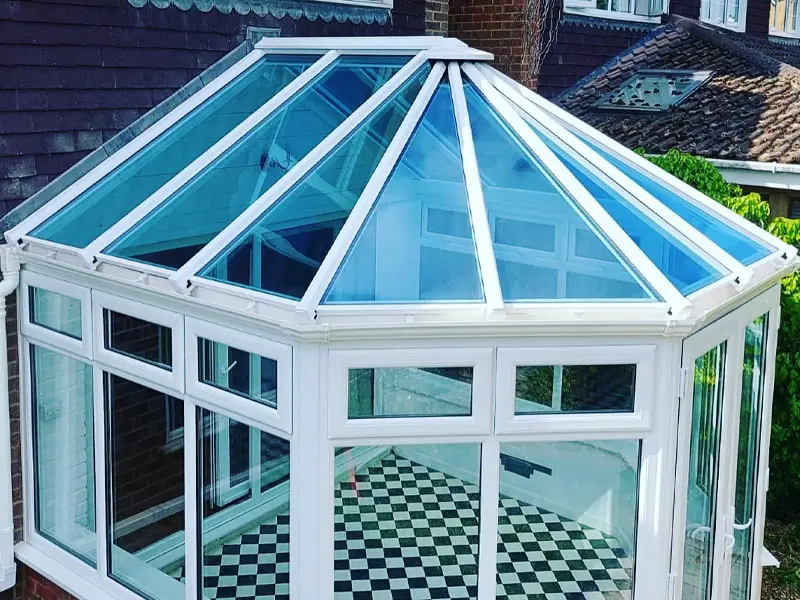
A conservatory is a glazed extension, typically with glass or polycarbonate walls and a predominantly glazed roof.
They became a staple of UK homes through the 1980s and 90s and remain popular today. Modern conservatories, particularly those with thermally efficient glass and solid roof systems, have significantly improved on older designs that were too hot in summer and too cold in winter.
A conservatory generally has a lighter feel than an orangery, with more glass and a more transparent visual connection to the garden.
What Is an Orangery?
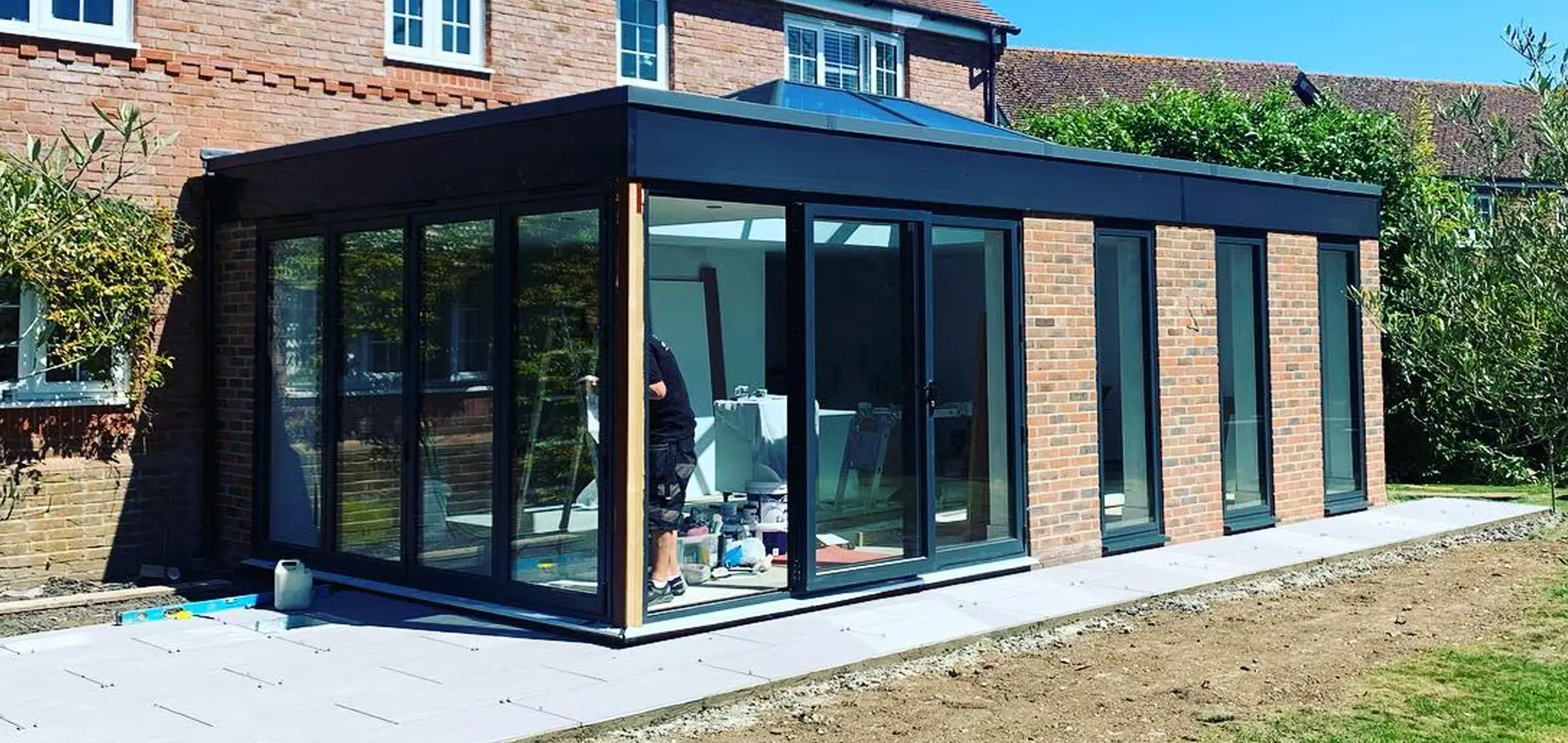
Orangeries have their origins in 17th and 18th-century country houses, large, light-filled structures originally built to overwinter citrus trees. Today, a modern orangery sits somewhere between a full house extension and a conservatory.
The key characteristics:
- Brick pillars, rendered columns, or substantial dwarf walls replace much of the glazed side panels, giving the structure a more solid, room-like feel
- A lantern roof provides natural light from above, while solid flat or pitched sections surround it
- The result looks and feels more like a natural extension of the house than a glazed garden room
Because of the greater proportion of insulated walls and solid roof, orangeries also perform considerably better thermally, making them a genuinely usable space year-round rather than a seasonal room.

Key Differences at a Glance
- Construction: conservatories are predominantly glass; orangeries have substantial masonry or solid wall elements
- Roof: conservatories have a fully glazed pitched roof; orangeries feature a lantern roof with solid surrounds
- Feel: conservatories feel lighter and more garden-facing; orangeries feel more like a proper room
- Thermal performance: orangeries retain heat significantly better due to solid wall construction
- Cost: orangeries typically cost more due to the additional brickwork and construction complexity
- Aesthetic: orangeries blend more naturally with traditional and period architecture

Which Is Right for Your Home?
If you want a light-filled garden room with a strong visual connection to the outdoors and a lower budget, a conservatory may be the right fit. If you want a year-round living space, a kitchen extension, dining room, or sitting room, that feels like a true part of the house and is comfortable in all seasons, an orangery is likely to be more suitable.
Orangeries also tend to add more value to a property and blend more naturally with traditional homes, which makes them increasingly popular as more homeowners look for spaces that genuinely extend how they live, rather than just adding square footage they can only use in summer.
What About Planning Permission?
Both orangeries and conservatories can often be built under permitted development rights without a full planning application, depending on size, position, and location.
There are specific rules around how much of the garden can be covered, proximity to boundaries, and maximum height. Properties in conservation areas or with Article 4 Directions may face additional restrictions.
“If you’re unsure whether your project needs planning permission, read our guide: Do I Need Planning Permission for an Orangery in Newbury?”
Get In touch
Contact us on 01635 728081 or complete our Online Enquiries Form